Private Investigator’s Dream Machine
Synes Elischka & Mariella Greil & Christian Schröder
The collaboration with Synes Elischka (video/installation/max msp) and Christian Schröder (sound/max msp) deals with the interleave of media, dance/performance and film/new media by means of a performative work.station. The work imagines an (im)possible future of a body that multiplies, modifies and transgresses itself; a micro-choreography evolves of a body without organs, morphing and doubling. A cruel, sensous and strangely poetic monstrosity made through relentless distortion with the help of the mirrormachine. PID machine imagines the grim perversion of processed body images and pseudo-organic symmetry in fluid, fleshy and futile creatures.
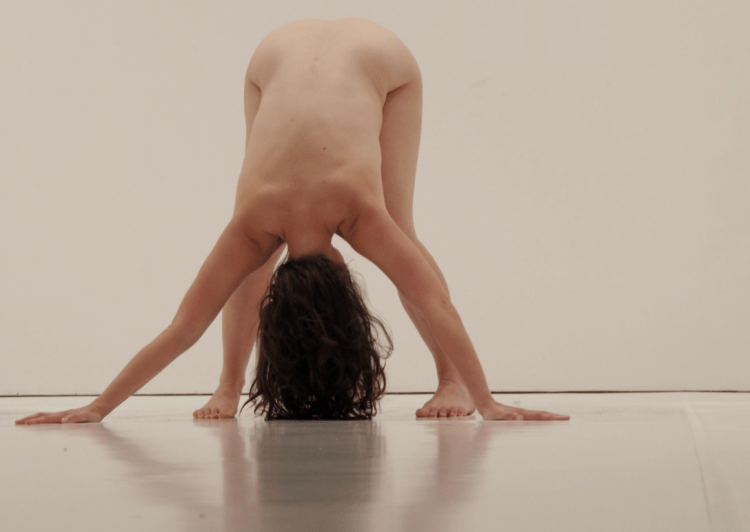
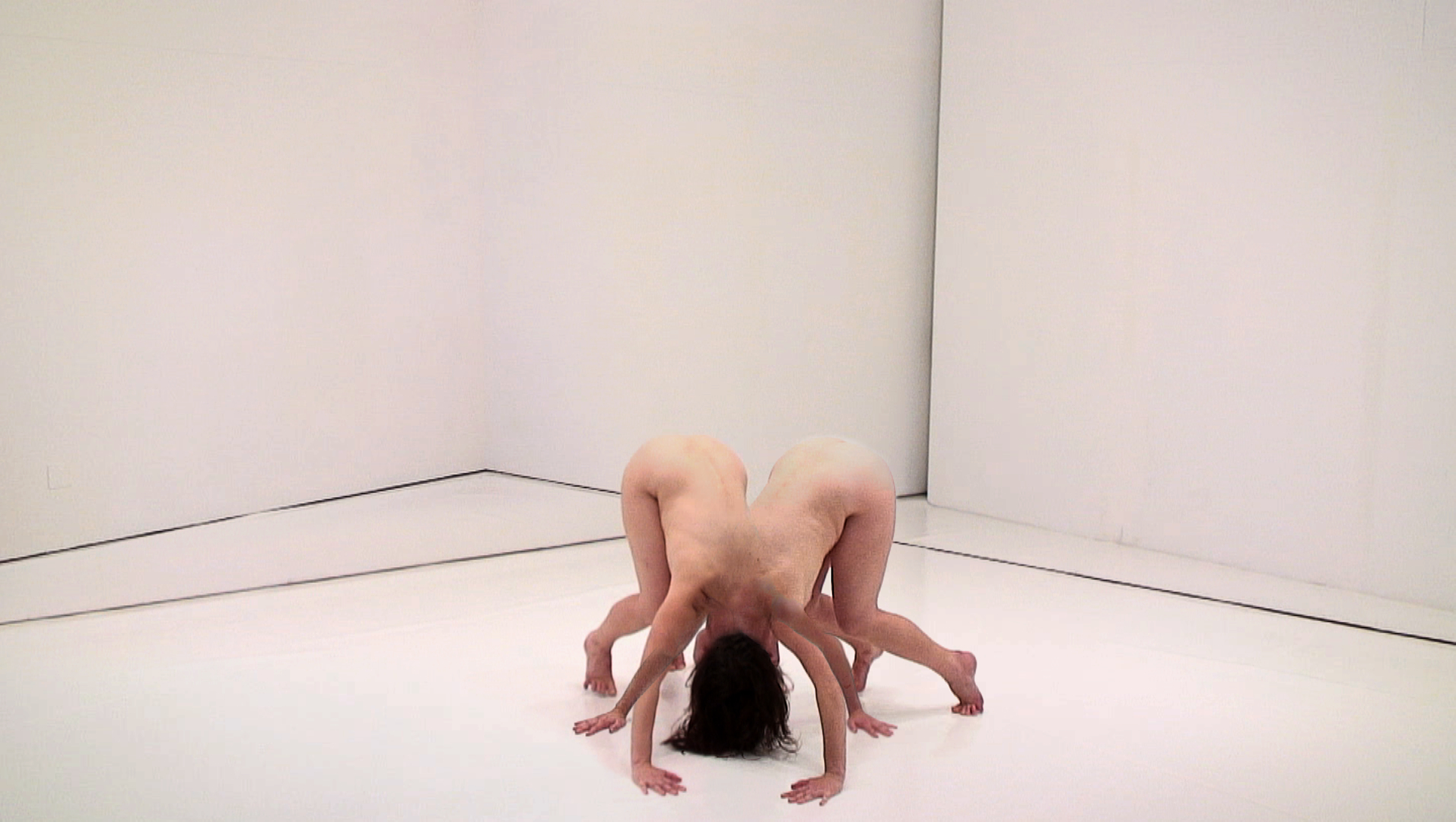
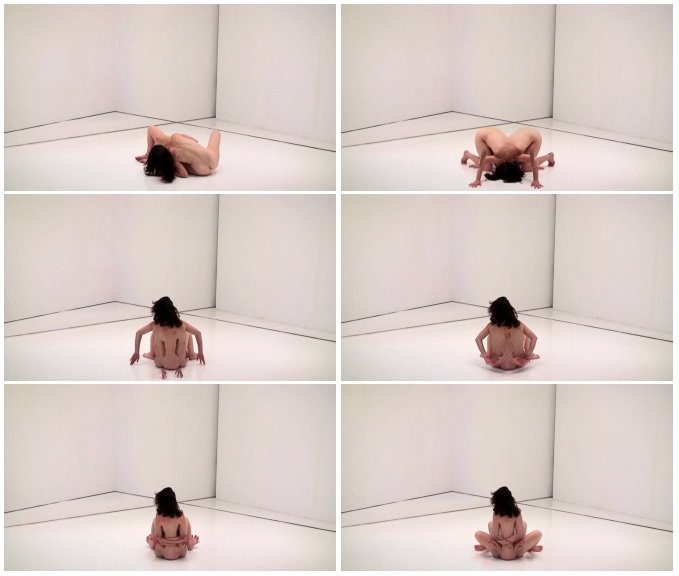
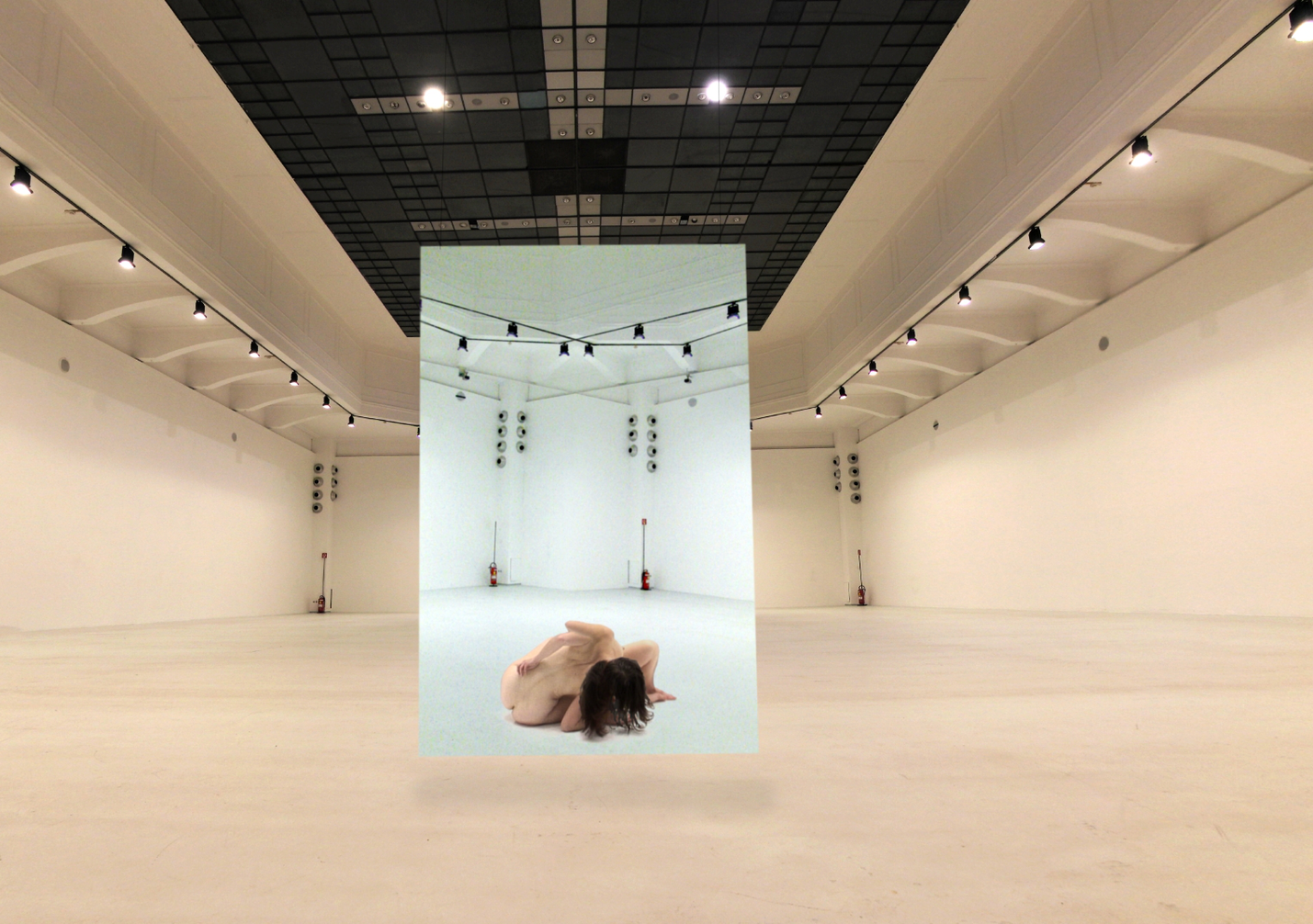
Video stills © Synes Elischka / Private Investigator’s Dream Machine / live-video composite: Synes Elischka / choreography & performance: Mariella
Private Investigator’s Dream Machine is ‘a perpetual reorganization of the body’[1] and emerged in contiguity to my preoccupation with an organless body as looming in Bellmer’s phantastic-realistic works around the anatomy of the unconscious or anxious body[2] and body anagrams.[3] When tracing the origins of the concept of the organless body[4] to the Theatre of Cruelty by Antonin Artaud[5], Stephan Günzel writes that ‘the fleshly, cruel images pulp and hypnotise the sensibility of the spectators […]’.[6] Private Investigator’s Dream Machine lays bare the neither natural nor artificial contact between performer and spectator, set-up and movement. Its techné is exposure, the in-between, negotiated between us, locating touch in the movement we make, the movement to come, surfacing on the screen. ‘The places, the sites of the existence of being, are henceforth the exposition of the bodies, that is, their laying bare […]’.[7] The creation of a work.station for spectators therefore made sense, as it invited the activation of exposure, opened up the possibilities for encountering bare bodies in becoming. The installation allowed an experience of a body always in forming, constant becoming, preceding organism or system. The set-up enabled the mutual creation of technical organs and spaces and was inhabited by new composite bodies surfacing at the skin of the screen. Sue Taylor resumes Hans Bellmer’s statements: ‘the affective images man creates of his body will not correspond to the reflection in the mirror’[8] and ‘mathematical processes operate not just in the abstract but in the flesh. The body participates in intellectual life’[9] when discussing ‘the fluid body image’, I feel resonances between Bellmer’s work and Private Investigator’s Dream Machine. In collaboration with Synes Elischka and Christian Schröder it was often discussed how body and algorithms can meet in the space of the installation, and how bare bodies emerge in the encounter with the audience, both in live-performance and mediated on the screen.
 Mariella Greil